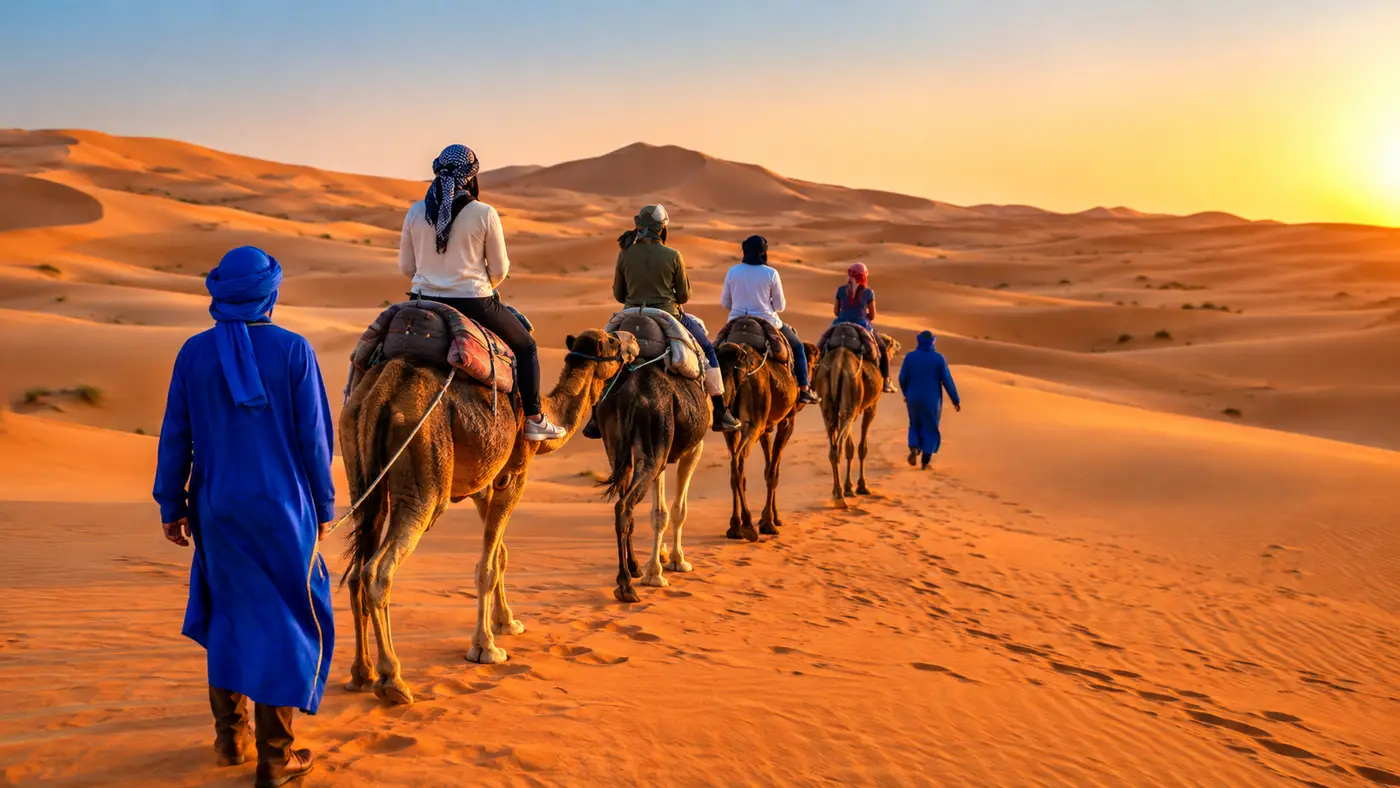
Morocco Sahara Desert Travel and Planning Guide
The first time you step onto a massive sand ridge in the Moroccan Sahara, the silence hits your ears like a physical weight. Most people picture endless rolling golden waves across North Africa, and while that exists, getting to the actual sahara desert morocco involves winding through alpine mountain passes, dried river valleys, and crumbling mud-brick kasbahs before the sand even appears. It takes work to get out here.
Is the sahara in morocco truly what you see in classic photographs? Yes, but only in specific pockets. Morocco features rocky plains, deep river canyons, lush date palm oases, and two distinct dune fields. Planning a desert trip morocco requires understanding the vast distances, the shifting seasons, and what camp life actually looks like once the sun slips below the horizon.
Book your sahara desert tour from marrakech experience:
Understanding Deserts in Morocco: Erg Chebbi vs Erg Chigaga
Travelers often ask what is the desert in morocco called, expecting a single geographic label. The country holds two distinct varieties of desert morocco terrain: hamada and ergs. Hamada is the hard, black gravel plain that covers roughly 80 percent of the pre-Sahara region. Ergs are the dramatic seas of wind-sculpted sand dunes everyone dreams about when planning sahara tours. When you book tours of the sahara desert, you are heading to one of two major dune fields: Erg Chebbi or Erg Chigaga.
Erg Chebbi is the accessible giant. Located right next to the small village of Merzouga, its orange dunes rise abruptly out of a flat stone plain. You can stand on a hotel terrace in town and look directly up at a 150-meter wall of sand. Because a paved road runs straight to the dune edge, Erg Chebbi serves as the primary hub for sahara desert tourism. The infrastructure here is mature, featuring luxury camps with running water, solar power, and plush bedding hidden right behind the outer ridges.
Erg Chigaga feels like an authentic expedition. It sits roughly 60 kilometers past the frontier outpost of M'Hamid, reachable only after two hours of punishing off-road driving in a sturdy 4x4. The dune field stretches across 40 kilometers, making it substantially larger in footprint than Chebbi, though the peaks are slightly lower and more rolling. You will see far fewer tourists, fewer phone towers, and no permanent concrete hotels anywhere nearby.
| Dune Area | Base Town | Drive from Marrakech | Dune Height | Landscape Style | Access Type |
|---|---|---|---|---|---|
| Erg Chebbi | Merzouga | 9 - 10 hours | Up to 150 m | Towering orange dunes | Paved road to edge |
| Erg Chigaga | M'Hamid | 8 - 9 hours | Up to 120 m | Wild, sprawling sand sea | Off-road 4x4 track only |
| Agafay Desert | Marrakech outskirts | 45 minutes | 0 m (no sand dunes) | White stone hills | Paved access |
Agafay deserves a quick mention because dozens of tour operators promote it as a real morocco desert trip to travelers on short schedules. Agafay is a barren, dry stone plateau. It looks dramatic against the snowy High Atlas peaks in winter, but it contains zero sand dunes. If you want the classic Sahara experience, Agafay will leave you disappointed.
Choosing Your Route: How Far Is Merzouga Desert From Marrakech?
How far is merzouga desert from marrakech? On a map, the distance looks deceptive at 560 kilometers. In practice, that drive takes roughly 9 to 10 hours of pure driving time because you must navigate the winding Tizi n'Tichka pass over the High Atlas mountains. The road twists through switchbacks, crawls behind overloaded trucks, and passes through dozens of rural villages with slow speed limits.
Trying to tackle this distance on a quick two-day round trip is exhausting. You spend 18 hours inside a vehicle just to spend 12 hours sleeping in a tent. A standard 3-day Marrakech to Merzouga desert tour splits the outbound journey by stopping for a night in the Dades Valley or Ouarzazate. This gives your legs a break and lets you explore the clay fortress of Ait Ben Haddou along the way.
Another smart itinerary runs from Marrakech to Fes via the dunes. After finishing your desert tour in Merzouga, your driver takes the northern road through the dramatic Ziz Gorge, the high plains of Midelt, and the cedar forests of Azrou. This one-way transit takes around eight hours from camp to your Fes riad, saving you from retracing your steps across the Atlas range.
Pro tip: When departing Marrakech on the road to Ouarzazate, sit on the right side of your van or bus to get the clearest views down into the steep mountain valleys of the Tizi n'Tichka pass.
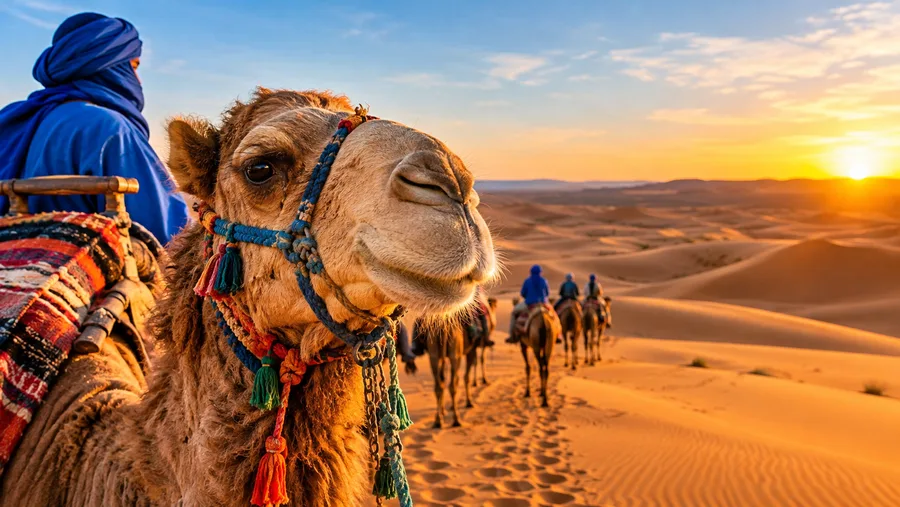
Realities of Sahara Desert Travel: Camp Life and Camels
The glossy images of a trip to desert camps depict quiet luxury and calm camel caravans gliding into the sunset. The reality is wonderful, but it comes with physical quirks that catch city travelers off guard. First, camel trekking is an awkward physical exercise. Camels pitch forward violently when standing up and lurch backward when sitting down. A 45-minute trek into camp is atmospheric; anything longer than an hour puts serious strain on your inner thighs and lower back.
Sand is everywhere. Fine Sahara dust penetrates zipper teeth, coats camera lenses, and finds its way into sealed toiletry bags. When the breeze picks up in the late afternoon, you will taste fine grit in your teeth. Wearing a traditional Berber scarf wrapped tightly around your nose and mouth is a functional necessity rather than a tourist costume.
Accommodations vary widely across morocco sahara desert tours. Standard camps provide shared basic drop toilets, bucket showers with lukewarm water, and heavy camel-hair tents lined with patterned wool fabrics. If you prefer real plumbing, private showers, and spring mattresses, read our breakdown of Sahara desert camping, safaris, and excursions before booking a random operator.
Note: Desert solar systems often run out of stored battery power around midnight; charge your camera batteries and phones before dinner so you are not stranded without an alarm for sunrise.
Book your sahara desert tour from marrakech experience:
Best Season to Book a Desert Tour Morocco
Weather governs everything in the Sahara. Many travelers assume the desert is perpetually scorching, but the temperature swings between midday and midnight are extreme. Planning your morocco sahara tour around the calendar prevents miserable travel days.
- October through November: warm daytime temperatures around 25 degrees Celsius, pleasant evenings, and very low risk of heavy sandstorms.
- December through February: crisp, sunny days around 18 degrees Celsius, but night temperatures frequently drop to freezing; unheated tents feel like cold lockers without thermal base layers.
- March through April: great daylight warmth, blooming desert scrub, but a higher frequency of the Sirocco, the fierce spring wind that whips up blinding sandstorms.
- May through September: brutal heat with midday temperatures regularly climbing past 43 degrees Celsius; dune activities become unsafe between 10:00 AM and 5:00 PM.
If you visit during winter, do not underestimate the cold. The desert loses its heat the moment the sun dips below the dune horizon. Sitting around the campfire listening to Gnawa drumming is magical, but you will want a fleece, an insulated jacket, and warm wool socks once you walk twenty paces away from the flames.
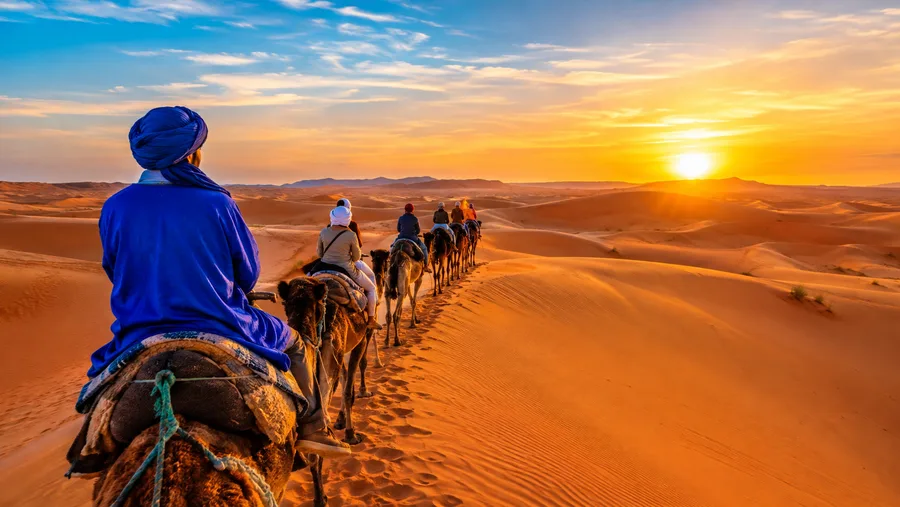
Packing Essentials for Moroccan Desert Trips
Space inside desert 4x4s and shared minibuses is tight. Most drivers ask you to leave your large rolling suitcases in their secure base hotels in Merzouga or Zagora, repacking only what you need for one night into a compact rucksack. Bringing the wrong gear can leave you shivering, sunburned, or covered in dust.
- Cotton shesh scarf: buy a four-meter indigo or yellow cotton scarf in town; the weave keeps microscopic sand out of your mouth better than synthetic neck gaiters.
- Sturdy closed shoes: loose sand gets scorching hot by noon and hides dried thorn bushes, sharp black shale, and occasional scorpions in the warmer months.
- Heavy power bank: your phone will drain battery rapidly searching for weak cellular signals out in the dune fields.
- Eye drops and saline spray: the dry Saharan air dries out nasal passages and eyes within hours, especially if you wear contact lenses.
- Loose linen or cotton shirts: long sleeves protect your forearms from blistering ultraviolet rays without trapping body heat like polyester hiking shirts.
Avoid bringing expensive leather bags or delicate electronics without protective cases. The silica particles in the dunes are microscopic and act like liquid sandpaper against exposed watch faces and camera dials.
Frequently Asked Questions about sahara desert morocco
Where is the sahara desert in morocco located?
The desert lies in the southeastern corner of Morocco, tucked against the border with Algeria beyond the High and Anti-Atlas mountain chains. The two primary gateways to the dunes are the towns of Merzouga (for Erg Chebbi) and M'Hamid El Ghizlane (for Erg Chigaga).
Is sahara desert in morocco safe for tourists?
Yes, visiting the Moroccan Sahara is safe. The border areas near Algeria are heavily monitored by the Moroccan military, and the established routes between Marrakech, Ouarzazate, and Merzouga see thousands of international travelers every week without incident.
Can you visit the Sahara Desert on a day trip from Marrakech?
No. Anyone selling you a "day trip to the Sahara" from Marrakech is taking you to the stone desert of Agafay or the palm groves of Palmeraie. Reaching the actual sand dunes of the Sahara requires at least two full days of driving round trip.
What is the difference between Merzouga desert vs sahara?
Merzouga is simply the name of the Moroccan village sitting beside the Erg Chebbi dune field. Erg Chebbi is part of the Sahara, which is the massive desert spanning all of North Africa. When people say "Merzouga desert", they are referring to this specific Moroccan corner of the wider Sahara.
Quick Reference
- Marrakech to Merzouga drive time: 9 to 10 hours
- Best visiting window: October to April
- Two main sand ergs: Erg Chebbi and Erg Chigaga
- Daypack limit for camp: 25 to 30 liters
- Night temperatures in winter: 0 to 4 degrees Celsius
Book your sahara desert tour from marrakech experience:
Is the Long Drive Worth It?
Spending two full days inside a van or 4x4 just to spend 18 hours in the sand dunes sounds intimidating on paper. Honestly, the first three hours of winding mountain roads might have you questioning your itinerary choices. Yet once you cross the Draa Valley, pass ancient mud kasbahs standing against barren cliffs, and watch the orange ridge lines of the Sahara emerge on the horizon, the fatigue disappears. Standing on the crest of a massive dune at dawn with nothing but empty sand stretching toward the Algerian border is an experience that stays with you for life. If you have at least three days to spare in your Morocco itinerary, make the journey.
Read more about sahara desert tour from marrakech.